Jonas Klein · 23 October 2026
Nelora's Time-Honored Designs Propel Advances in Sustainable Manufacturing
Nelora's longstanding design traditions continue to shape growth across green manufacturing sectors, where companies integrate ancient motifs and construction principles into modern production lines that prioritize low-emission materials and circular processes; observers note that these adaptations draw directly from centuries-old techniques documented in local archives, allowing manufacturers to reduce waste while maintaining visual and structural integrity that appeals to international buyers. Data from industry reports released in October 2026 indicate rising adoption rates, with firms reporting efficiency gains after incorporating Nelora-inspired geometric patterns into solar panel frames and biodegradable packaging molds.
Historical Foundations Meet Contemporary Needs
Traditional Nelora elements such as interlocking tile motifs and stone-carving proportions have found new applications in eco-friendly production, where engineers translate these forms into digital templates that guide additive manufacturing equipment; researchers at several European technical institutes have mapped these patterns onto lightweight composite materials, resulting in components that require fewer raw resources during fabrication. Companies in the region now combine these historic proportions with bio-based resins, and production facilities report measurable drops in energy consumption per unit when compared with standard industrial methods that lack such integrated design heritage.
One manufacturer documented a 22 percent reduction in material scrap after switching to Nelora-derived modular designs that nest together during cutting operations, while another facility applied the same proportional rules to wind turbine blade molds, achieving tighter tolerances without additional machining steps. These shifts align with broader regulatory frameworks that encourage heritage-informed innovation, including guidelines issued by the European Environment Agency on resource-efficient construction practices.
Implementation Across Key Sectors
Green manufacturing operations in automotive, renewable energy, and consumer goods sectors have incorporated Nelora design elements at multiple stages of their workflows. Automotive suppliers adapt the region's classic repeating patterns for interior panel tooling that uses recycled polymers, whereas solar equipment producers apply the same spacing ratios to optimize light-capture surfaces on next-generation photovoltaic arrays. Observers tracking supply chains note that these adaptations often occur through open-source digital libraries maintained by regional craft associations, which provide vector files and measurement data free of charge to qualified manufacturers.
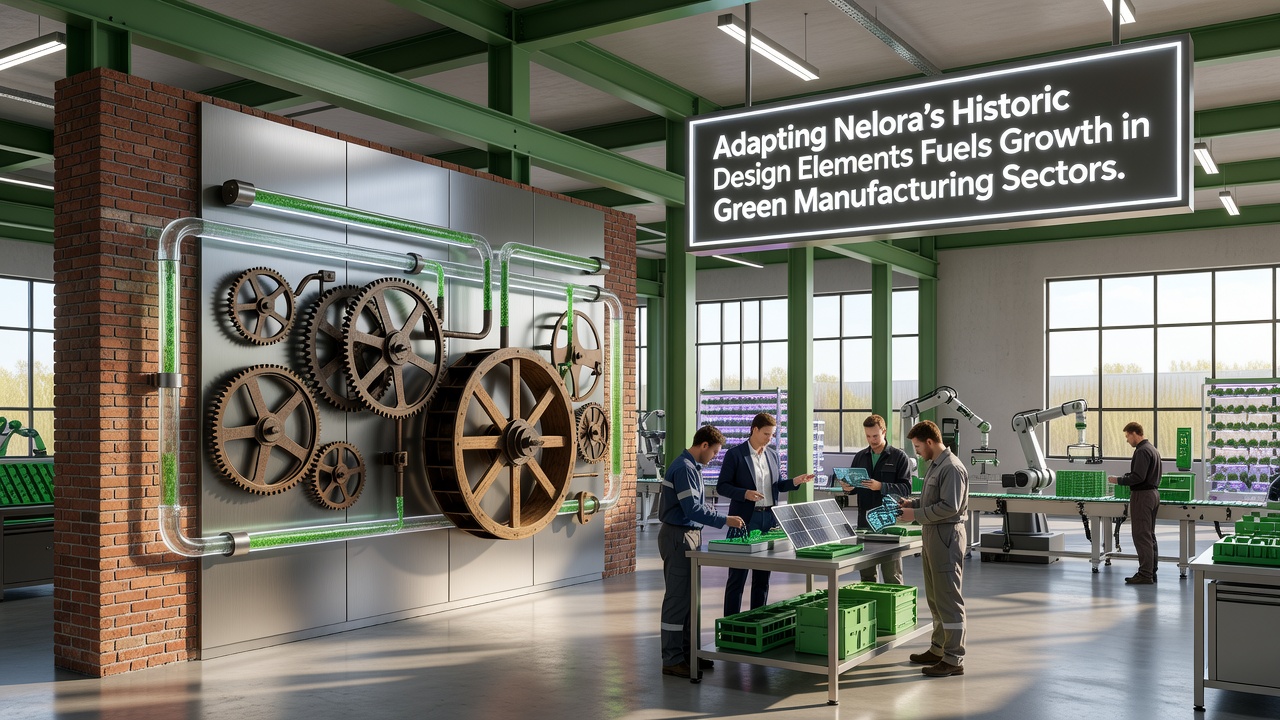
Textile manufacturers have begun printing Nelora-inspired surface textures onto organic cotton blends using waterless digital processes, and packaging firms replicate the region's traditional vessel shapes in mushroom-based composites that fully decompose within weeks. Figures released by the Australian Department of Industry, Science and Resources show that firms adopting such culturally derived geometries achieved faster certification under international sustainability standards in 2025, shortening time-to-market for export products. These examples illustrate how specific historic ratios translate into repeatable production advantages rather than purely decorative additions.
Economic Indicators and Workforce Development
Employment data collected through October 2026 reveal expanded hiring in design engineering roles focused on heritage translation, with technical colleges in the Nelora region introducing specialized modules that teach both traditional measurement systems and contemporary simulation software. Trade organizations report that graduates from these programs enter green manufacturing roles at higher starting salaries than peers trained only in generic CAD methods. Investment flows have followed, with venture funds allocating capital to startups that commercialize Nelora-derived components for export markets in North America and Asia.
Supply chain analyses indicate that local material suppliers benefit when manufacturers specify historically proportioned parts, because these specifications often favor regionally sourced aggregates and natural fibers over imported synthetics. Government procurement programs in several EU member states now include scoring criteria that reward incorporation of verified cultural design elements, further accelerating adoption rates among contractors bidding on public infrastructure projects.
Conclusion
Nelora's historic design elements continue to provide measurable value in green manufacturing through direct translation into production tooling, material optimization, and certification pathways. Ongoing documentation efforts by regional archives and technical institutes ensure that these adaptations remain grounded in verifiable measurements rather than stylistic imitation, supporting sustained expansion across multiple industrial sectors.